May 6, 2026
2 min read


Eyecare practice names are always changing. On the other hand, National Provider Identifiers (NPIs) are federally required, unique 10-digit numbers that remain attached to an individual eyecare clinician. Therefore, when setting up or enhancing your CRM, use the NPI number as the key to your underlying data to ensure you never lose track of who you should be speaking with or targeting.
While many practice owners may try to be unique in naming their eyecare practice, inevitably, there are multiple Town Eyecare or Family Vision Center business entities across the United States. This leads to duplicates and confusion about which Town Eyecare the team is calling on, requiring specific location and even specialty information to ensure one has the right practice.
Additionally, consolidation and market changes readily disrupt practice-level identifiers. For example, when two practices or health systems merge, the new organization often takes on a new structure and brand. For instance, Bellin Health and Gundersen Health System merged in December 2022 and chose a completely new name, Emplify Health, by May 2024. Furthermore, several large eyecare brands continuously purchase practices and rebrand them to have the corporate name.
When a clinic or practice closes, its name and any identifiers vanish. Later, its constituent providers may join other groups, diffusing their prior practice identity.
Finally, individual clinicians may move between practices, and most work at multiple practices. Their personal NPI follows them, but their practice changes. Using the practice name alone to identify and address providers breaks down whenever providers move or work from multiple locations.
Organization-level metrics, such as the number of sites, are also poor proxies for the number of practicing clinicians within the organization. If you're sizing accounts, creating sales territories, prioritizing outreach, or allocating coverage based on how many locations a practice has, you're likely misjudging where the clinicians actually are and misallocating spend against the wrong targets. Without the NPI layer, any targeting model built on an org-level footprint may over-invest in sprawling but clinician-thin networks and under-invest in concentrated, high-value groups.
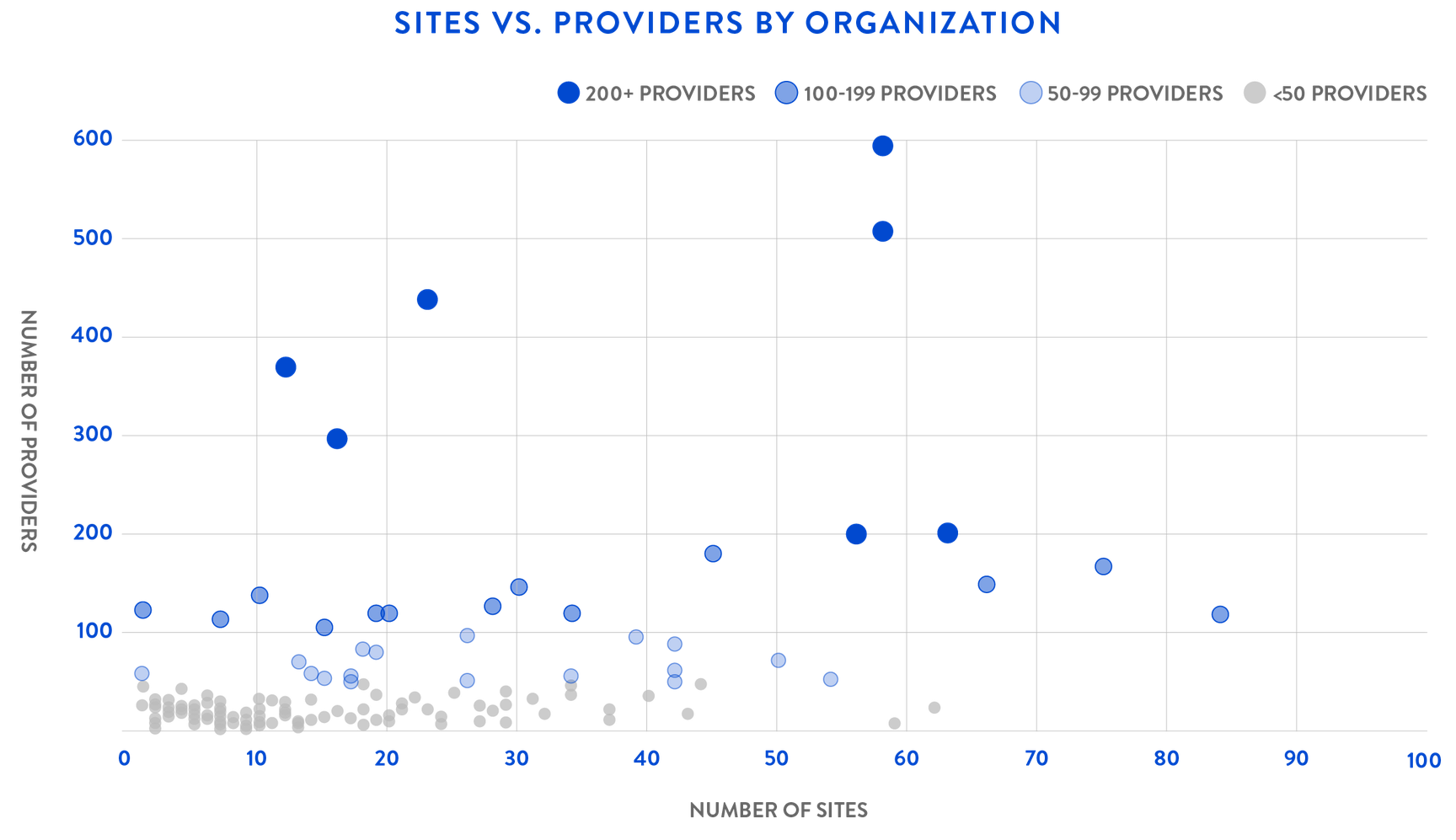
By contrast, NPIs persist through these changes. An individual’s NPI is always theirs. Clinicians must notify NPPES of changes within 30 days, but changes such as address or phone number do not affect the NPI itself. The only routine way an NPI can be removed is if CMS detects fraudulent use; otherwise, it is permanent, and CMS does not recycle or reassign NPI numbers.
The use and persistence of NPIs are governed by federal HIPAA rules, 45 CFR § 162.410, which obligates covered providers to obtain an NPI and use it in transactions. The regulatory design is that NPIs are stable anchors: one per clinician and not reissued.
To use NPIs in your CRM while managing their quirks, follow these guidelines:
Names change, practices merge, clinicians move, and every time that happens, your data breaks. NPIs don't. They're federally mandated, permanently assigned, and follow the individual clinician regardless of where they practice or what the building sign says. For any organization selling into, marketing to, or managing relationships across eyecare, the NPI is the only reliable foundation for your data infrastructure. The companies that get this right will know exactly who they're talking to and where to find them. The ones that don't will keep chasing practice names that no longer exist.